More...
Introduction
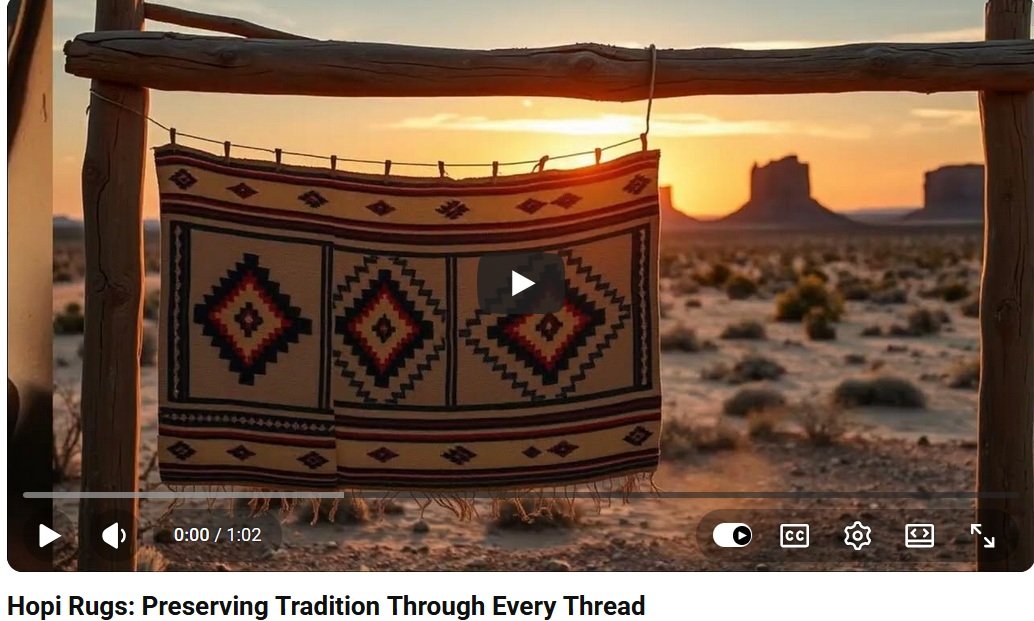
In the heart of the Southwest, where the vast desert landscape meets the sky, lies the Hopi land, a place steeped in ancient traditions and rich cultural heritage. Among the Hopi, weaving is not just a craft but a profound expression of their spirituality, beliefs, and history. Every Hopi rug tells a story, capturing in its threads the essence of the weaver’s world. This article takes you on a journey through one such story—a narrative of life, nature, and the spiritual connection between the Hopi people and the world around them, all intricately woven into a Hopi rug.
The Beginning of the Story
The story begins with a young Hopi woman named Talasi, which means "corn flower." Talasi had learned the art of weaving from her grandmother, who had passed down the skills, techniques, and, most importantly, the stories embedded in each pattern. For Talasi, weaving was a way to honor her ancestors and connect with the spiritual world.
One day, inspired by a vision she had during a kachina ceremony, Talasi decided to weave a rug that would tell the story of her village’s relationship with the corn, a crop that is central to Hopi life. Corn is not just food for the Hopi; it is a sacred symbol of life, growth, and sustenance. The story of corn is intertwined with the Hopi’s connection to the earth, the rain, and the spiritual beings that protect their harvests.
Weaving the Story: The Symbols and Patterns
Talasi began her work by setting up her loom, carefully preparing the warp threads that would form the foundation of her rug. As she worked, she sang traditional songs and offered prayers to the spirits, asking for guidance and blessings in her endeavor.
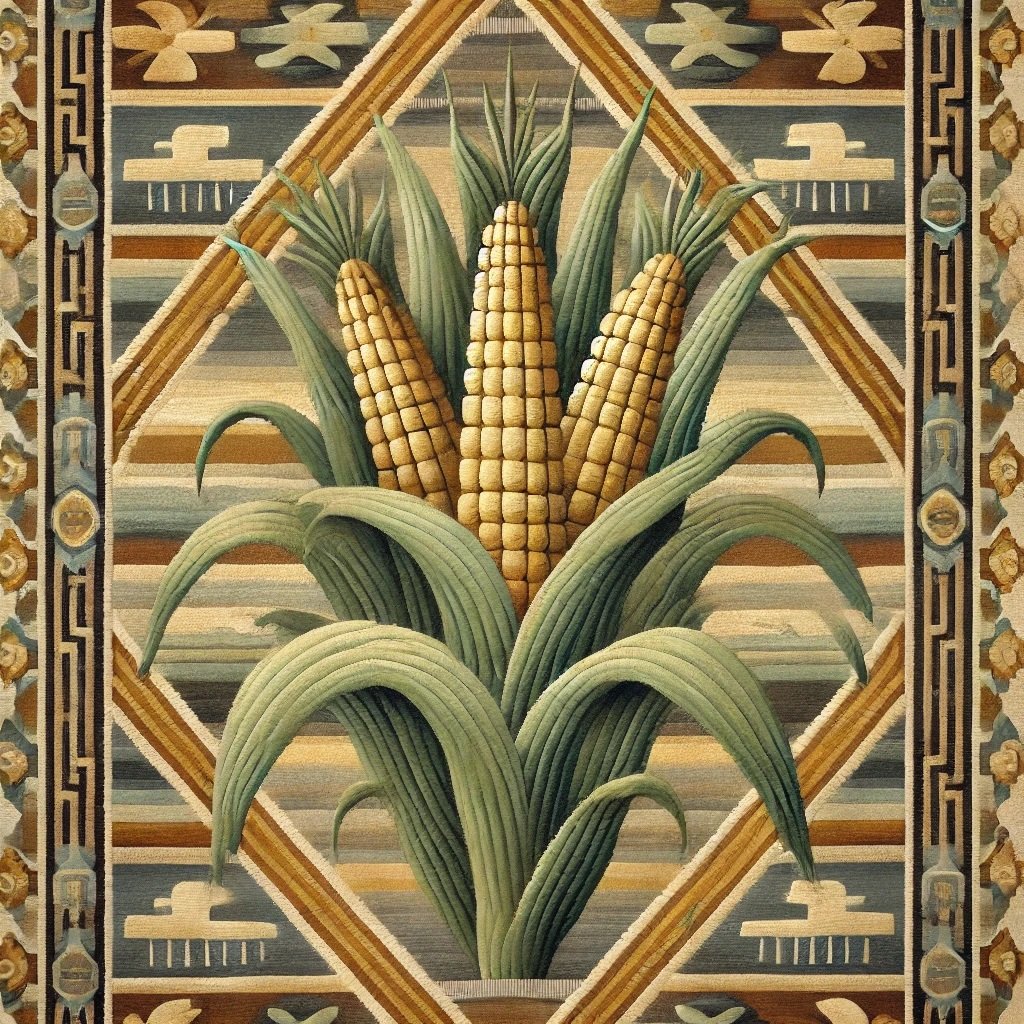
The first pattern she wove was that of Corn Stalks, standing tall and proud. Each stalk was depicted in rich earthy tones, representing the different stages of growth—from the young green shoots to the mature golden ears ready for harvest. The corn stalks symbolized life and the sustenance that the earth provides. The threads she used were dyed with natural colors, derived from the plants and minerals of the Hopi land, ensuring that the rug remained connected to the earth from which it was born.
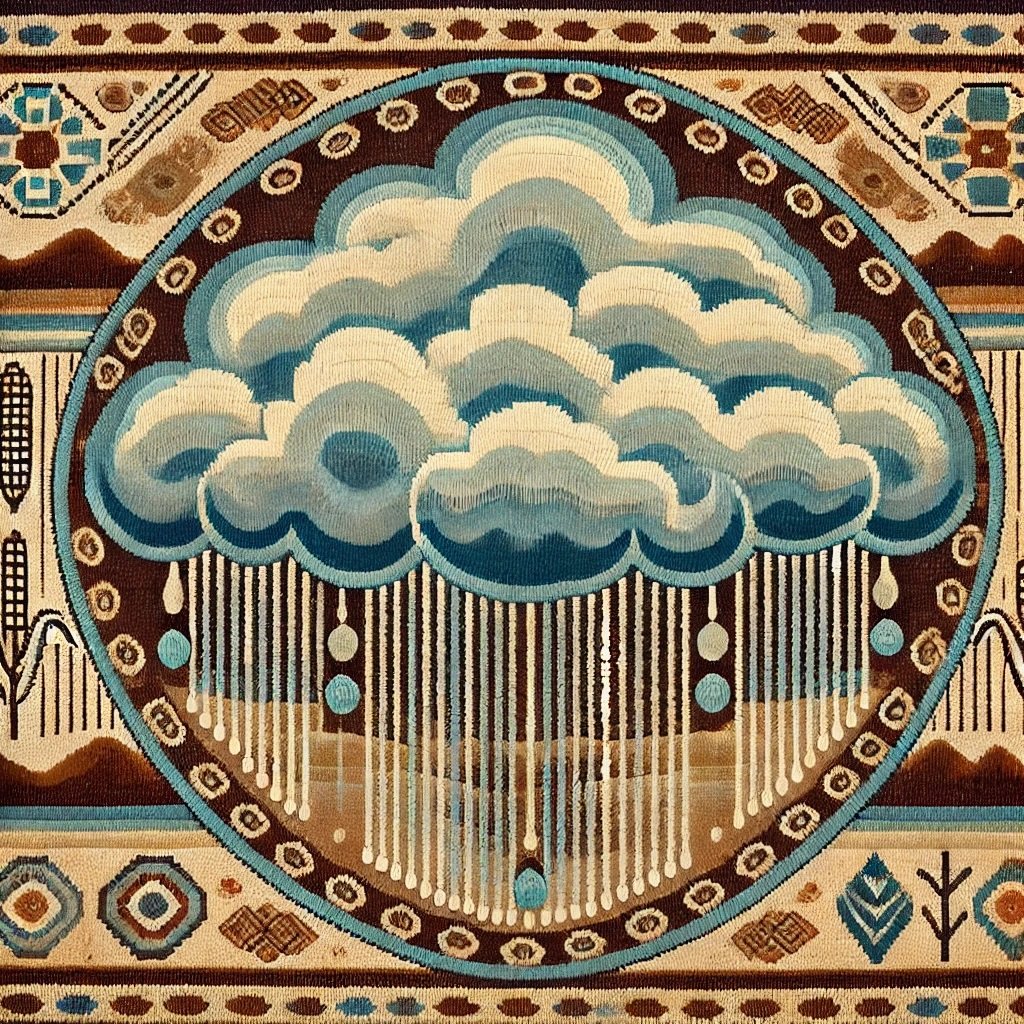
Next, Talasi wove a pattern of Rain Clouds hovering above the corn. Rain is a precious gift in the arid landscape of the Southwest, and the Hopi people depend on it to nourish their crops. The rain clouds in the rug were depicted in shades of blue and gray, with delicate lines representing the falling rain. These rain patterns were not just designs; they were prayers woven into the fabric, asking the spirits to bless the land with life-giving water.
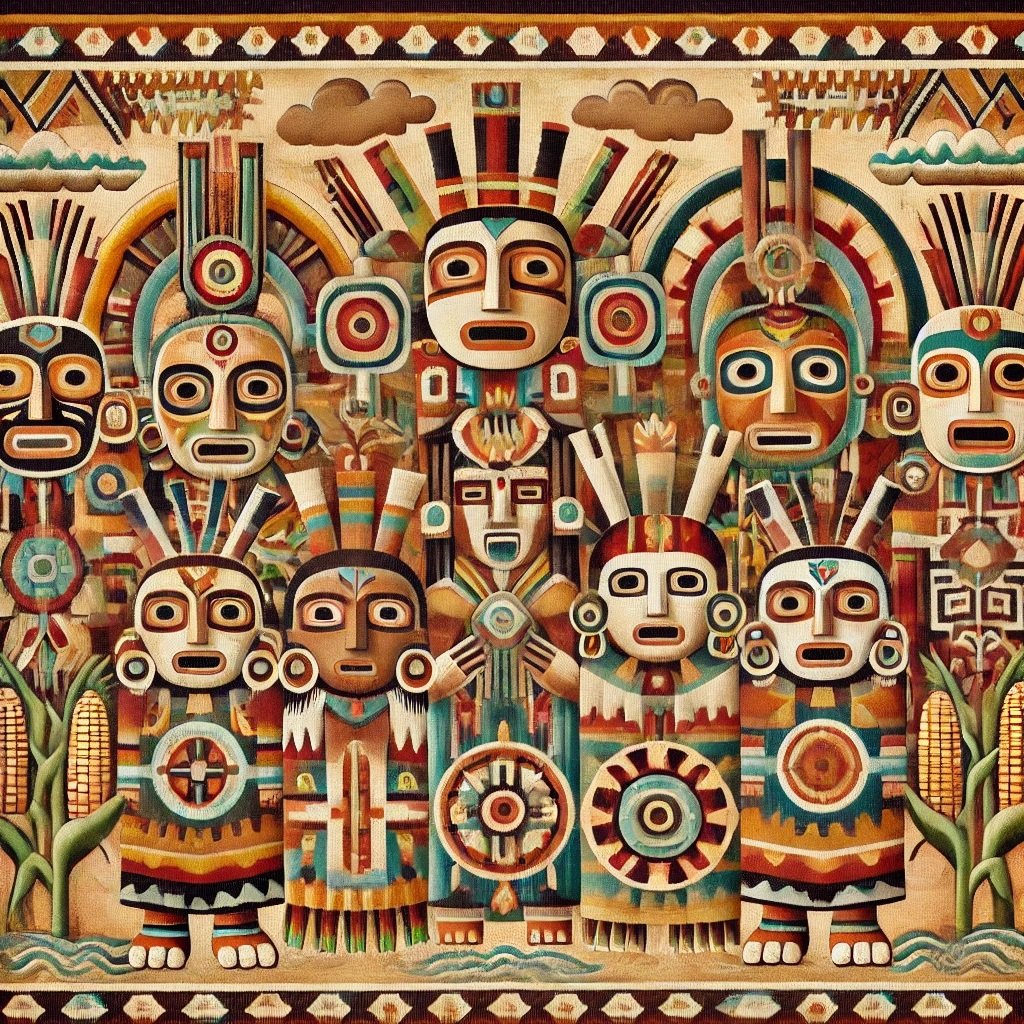
As she continued, Talasi added Kachina Figures to her rug. These figures, representing the spiritual beings who watch over the Hopi people, were depicted dancing joyfully across the fabric. Each kachina was woven with vibrant colors and intricate details, symbolizing the different roles they play in Hopi ceremonies—some bringing rain, others ensuring a bountiful harvest, and still others offering protection. The kachinas were the guardians of the corn, ensuring that it grew strong and healthy.
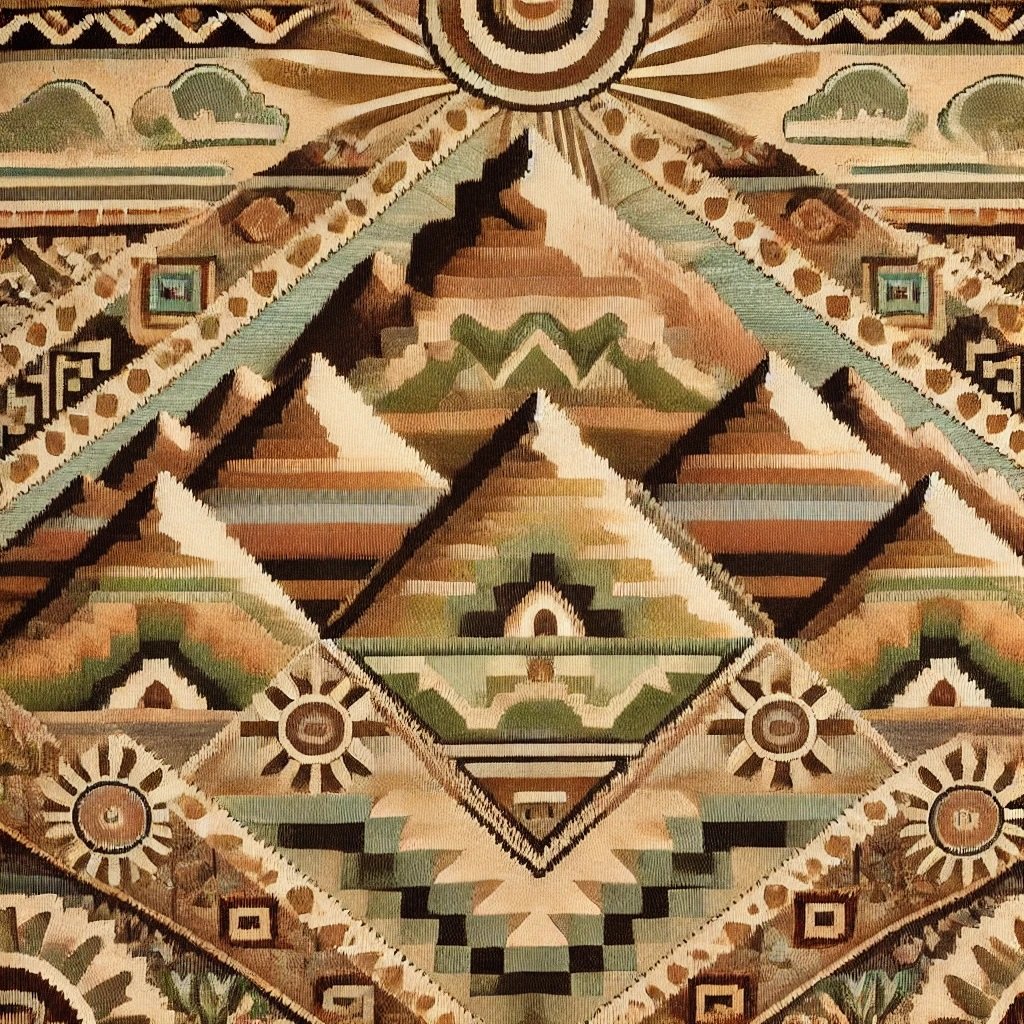
Talasi also included geometric patterns of Mountains and Valleys, representing the Hopi’s connection to the land and the physical landscape that surrounds them. These shapes symbolized stability, endurance, and the cyclical nature of life. The mountains stood as sentinels, watching over the village, while the valleys represented the fertile grounds where the corn grew.
The Completion: A Living Story
After weeks of meticulous work, Talasi’s rug was finally complete. The finished piece was not just a beautiful work of art; it was a living story, a testament to the Hopi people’s connection to their land, their ancestors, and their spiritual beliefs. Every time someone looked at the rug, they would be reminded of the importance of corn in Hopi life, the need for rain, and the protection offered by the kachinas.
The rug was displayed in Talasi’s home, where it became a focal point during ceremonies and gatherings. Elders would point to the different patterns, explaining their meanings to the younger generations, ensuring that the story of the rug would continue to be told for years to come. The rug became more than just a household item; it was a sacred object, a symbol of cultural continuity and spiritual connection.
Legacy and Reflection
Talasi’s rug, like many Hopi rugs, is a reflection of the weaver’s life, beliefs, and the world around her. It is a physical representation of intangible concepts—faith, tradition, and the deep respect the Hopi people have for nature and the spiritual world. The story woven into the rug is a reminder that every thread carries meaning, every pattern holds a message, and every rug is a piece of history, preserving the culture and heritage of the Hopi people for future generations.
As the years pass, Talasi’s rug will continue to tell its story, its colors perhaps fading slightly with time, but its message enduring. It will serve as a bridge between the past and the present, a testament to the Hopi way of life and the enduring power of tradition. Through this rug, the story of Talasi, her village, and the sacred corn will live on, woven into the very fabric of Hopi culture.
Conclusion
The story placed on a Hopi rug is more than just a narrative; it is a spiritual and cultural legacy woven with care, love, and profound meaning. Talasi’s rug is just one example of how the Hopi people use their artistry to connect with their history, their environment, and the divine. These rugs are threads of tradition and cultural heritage, each one a unique testament to the enduring spirit of the Hopi people.

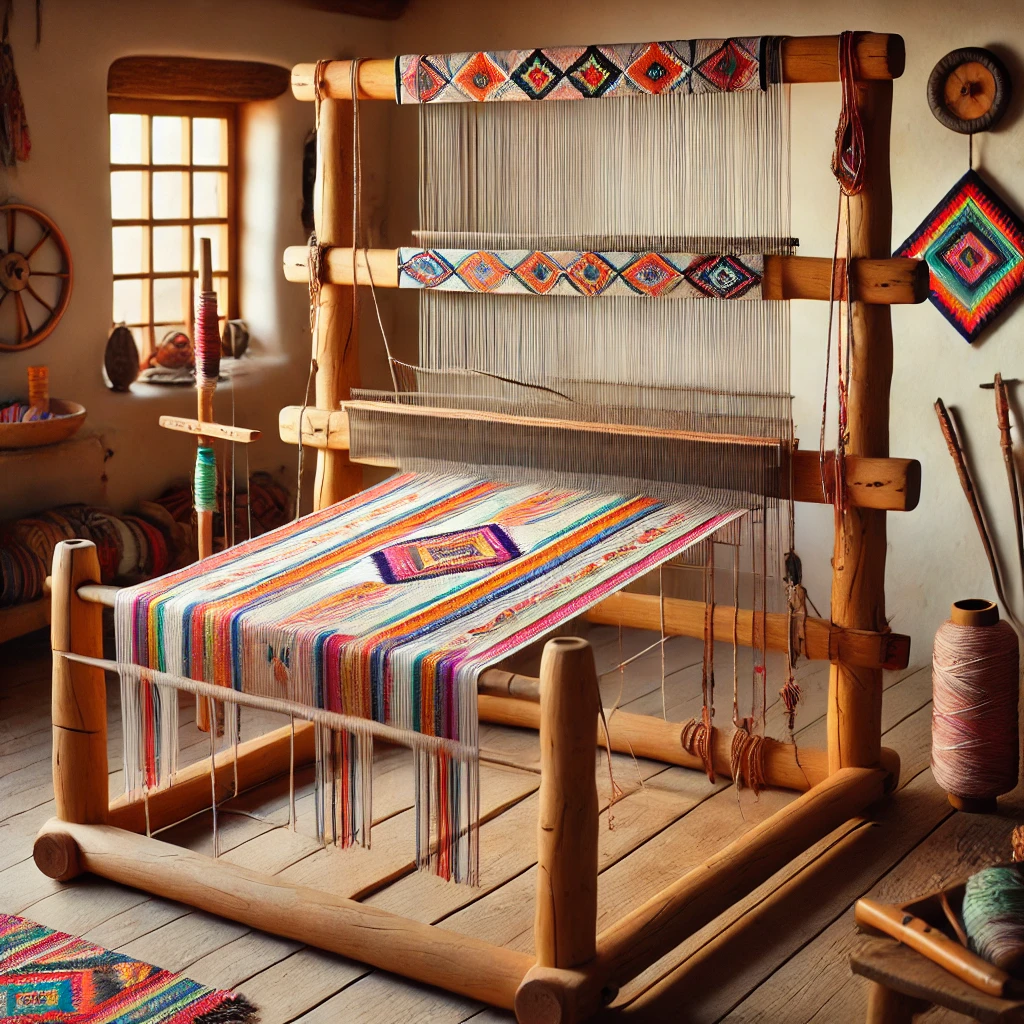 Creating a traditional Hopi loom involves crafting a horizontal structure that is simple, yet effective, and has been used for generations. Here are the detailed steps and specifications for building your own horizontal Hopi loom.